Leopard gecko · handling
How to handle a leopard gecko
Scoop, never grab, and never touch the tail. How to tame a new gecko step by step, and what to do in the first minutes if its tail drops off.
Handling a leopard gecko at a glance
- Pick it upScoop, never grabWith both hands, all four feet supported (RSPCA)
- NeverTouch the tailIt can drop off, and the gecko loses its fat store (RSPCA)
- How long10–15 minutesLess in a cool room, so it does not get cold (RSPCA)
- New geckoWait a weekLet it settle first (RSPCA). PetMD says a few days
- Young geckoFrom 15 cm (6 in)Handle it regularly only once it is this long (PetMD)
- Leave it aloneWhile sheddingAnd for a few days after (The Vet Desk, PetMD)
Leopard geckos have thin, fragile skin that bruises easily. Handle gently (University of Liverpool vets).
Picking up
How to pick up a leopard gecko
Wash your hands
Before and after, every time. Reptiles can carry salmonella. Source: RSPCA, RVC
Come in low and slow
Let it see your hand. If it backs away or tries to bite, leave it alone and try again another time. Source: RSPCA
Scoop it up
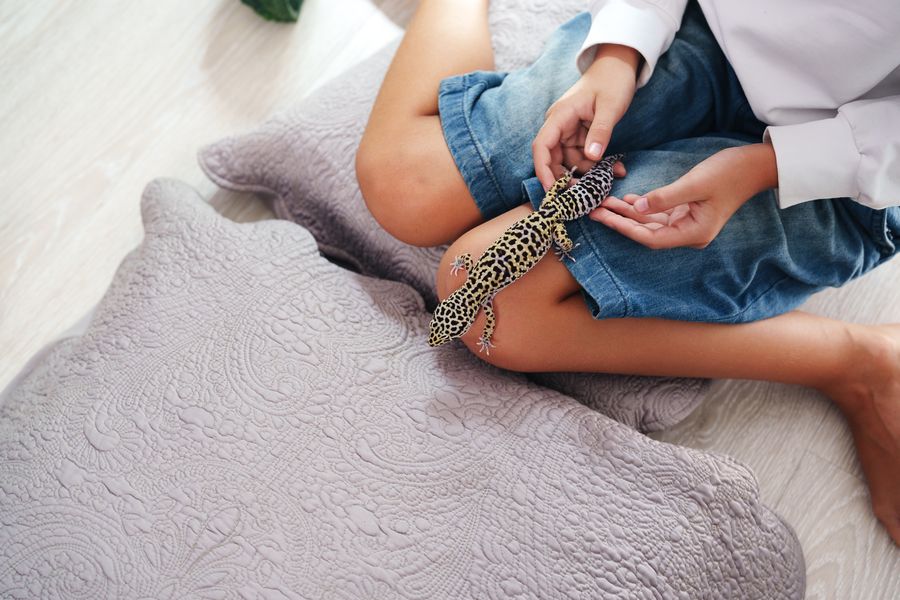
Slide your hand under its belly and lift with both hands, so all four feet are supported. Never grab it. Source: RSPCA PetMD supports the belly with one hand and the area just behind the front legs with the other. Source: PetMD
Keep clear of the tail
Never pick it up by the tail or squeeze it. Source: RSPCA, PetMD
Stay close to the ground
We suggest sitting on the floor or over a soft surface, so a jump or a slip is a short one. Let it walk from hand to hand.
Put it back after 10 to 15 minutes
Sooner if the room is cool: a gecko out of its vivarium loses body heat. Source: RSPCA
Taming
How to tame a new leopard gecko
A new gecko needs time before it is handled. Go slowly, and let it set the pace. Source: RSPCA, PetMD
Day one: leave it alone
Place it in the vivarium with food and water, then leave it until the next day. Source: RSPCA
The first week: care only
Feed, refill water and spot clean, but avoid handling it. Source: RSPCA PetMD gives it at least a few days. Source: PetMD
Then: short, calm sessions
A few minutes at first, building towards 10 to 15 minutes. Stop if it backs away or tries to bite. Source: RSPCA
Skip shedding days
Leave it alone while it sheds and for a few days after. Source: The Vet Desk, PetMD
Young geckos: little and often
PetMD says not to handle a gecko regularly until it is at least 15 cm (6 in) long. Source: PetMD
Tail drop
Leopard gecko dropped its tail? What to do
Leopard geckos can shed their tail to escape a predator. The tail has built-in break points and can wriggle for up to 30 minutes after it drops. Source: PetMD It is a defence, so it happens when the tail is grabbed or squeezed, when the gecko feels threatened, during rough handling, or if the tail gets caught. Source: PetMD, University of Liverpool vets, The Vet Desk Sick or underfed geckos drop their tails more easily. Source: PetMD
Stay calm and check the stump
Very little blood is normal: blood vessels close off quickly. Source: PetMD, The Vet Desk
Swap to paper towel
Take out sand, soil, moss or other loose bedding, so nothing gets into the wound, and change the towel often. Source: PetMD, The Vet Desk
Do not treat the stump
Do not clean it, bandage it or put ointment on it: these can slow healing. Source: PetMD
Keep it on its own
Separate it from other animals, which may pick on it. Source: The Vet Desk
Keep the basics right
Correct temperatures, a hide, fresh water and its vitamins. Source: PetMD It has lost its fat store, so make sure it eats well. Source: RSPCA, The Vet Desk
Watch for infection
Infection is the biggest risk after a tail drop. If the stump looks infected, see a reptile vet. Source: PetMD, The Vet Desk
Find the cause
Was the tail grabbed, caught in something, or was the gecko frightened? Fix it so it does not happen again, and check your gecko is well. Source: The Vet Desk
Regrowth
Will the tail grow back?
Yes, usually. Sources give these stages:
| When | What happens | Source |
|---|---|---|
| 7 to 10 days | A thin layer of skin covers the stump | PetMD |
| About a week later | The body starts to regrow the spinal cord | PetMD |
| About 30 days | The wound closes and heals | The Vet Desk |
| About 30 more days | The new tail grows, about 60 days in all | The Vet Desk |
| Weeks to months | Complete regrowth | PetMD |
It looks different
The new tail is usually shorter, rounder at the tip, often darker and less flexible, because it grows around cartilage instead of bone. Source: PetMD, The Vet Desk, University of Liverpool vets
It can happen again
A gecko can drop and regrow its tail more than once, but each break is usually closer to the body. An older gecko may not regrow it at all. Source: PetMD, The Vet Desk
It costs fat
The tail is the fat store. Regrowing it is hard on the gecko, which has to rebuild those reserves. Source: RSPCA, PetMD
Prevention
Never hold the tail, keep it from getting caught, and keep the vivarium calm. Healthy, well-kept geckos are less likely to drop their tails. Source: PetMD, The Vet Desk
Bites
Do leopard geckos bite?
Rarely. A gecko bites when it feels seriously threatened, often when a new gecko is handled too soon, or by mistake when it goes for food in your hand. Source: The Vet Desk RSPCA advises leaving a gecko alone if it tries to bite, and trying again another time. Source: RSPCA
- An adult’s bite feels like a pinch; a baby’s is unlikely to hurt. Bites usually do not draw blood. Source: The Vet Desk
- Leopard geckos have no venom. Wash the area with soap and water. Source: The Vet Desk
- If a gecko keeps biting even with gentle handling, ask a vet to check its health. Source: The Vet Desk
Children
Leopard geckos and children
Reptiles can carry salmonella, which is a particular risk for young children and people with weak immune systems. Source: RVC An adult should supervise, and everyone should wash their hands with soap after touching the gecko or anything in its vivarium. Source: RSPCA, RVC Seat children on the floor and show them how to scoop, never grab.
Questions people ask
Handling questions
How long can I hold my leopard gecko?
Around 10 to 15 minutes at a time, depending on how warm the room is (RSPCA).
When can I start handling a new leopard gecko?
After its first week (RSPCA); PetMD says at least a few days. Do not handle a young gecko regularly until it is 15 cm (6 in) long (PetMD).
Do leopard geckos like being held?
They are known as easy to handle (PetMD). They do not need company (RSPCA), so keep sessions short, and stop if it backs away.
Does a leopard gecko bite hurt?
Not much. An adult’s bite feels like a pinch and usually does not draw blood (The Vet Desk). Wash the area.
What do I do if my leopard gecko drops its tail?
Swap to a paper towel floor, keep it apart from other animals, do not treat the stump, and watch for infection. If the stump bleeds, press gently and see a vet (PetMD, The Vet Desk).
How long does a leopard gecko tail take to grow back?
Skin covers the stump in 7 to 10 days, and complete regrowth takes weeks to months (PetMD). The Vet Desk gives about 60 days in all.
Does it hurt a leopard gecko to lose its tail?
The Vet Desk says it does not feel pain, but it is stressful and costs the gecko its fat store (RSPCA).
Can I hold my leopard gecko while it is shedding?
Best not. Leave it alone while it sheds and for a few days after (The Vet Desk, PetMD).
Sources
We read each source on 27 November 2026. Where good sources disagree, we show the range and say so. How we check our numbers
- RSPCA Leopard gecko care page and care sheet
- PetMD Leopard gecko care sheet. Maria Zayas, DVM; reviewed by Ivan Alfonso, DVM; updated 8 May 2026
- PetMD Lizard tail loss: what to do. Catherine Gose, CVT; reviewed by Melissa Witherell, DVM; updated May 2023
- The Vet Desk What to do if your leopard gecko drops its tail. Oliver Jones, 29 October 2025 (no vet reviewer listed)
- The Vet Desk Do leopard geckos bite? Rachael Gerkensmeyer, 27 January 2026 (no vet reviewer listed)
- The Vet Desk Leopard gecko shedding 101: how often and for how long. Reviewed by Dr Luqman Javed, DVM, updated 29 October 2025
- University of Liverpool Veterinary Practice Leopard gecko husbandry and care. Filipe Martinho, MRCVS
- Royal Veterinary College, Beaumont Sainsbury Animal Hospital Leopard gecko care factsheet, reviewed December 2024
Written by: ScaleAndShed editorial team
Vet review: pending, this page has not yet been reviewed by a reptile vet
Updated 27 November 2026